The Sound of a Space: Why Hospitality and Wellness Businesses Should Think Beyond Background Music
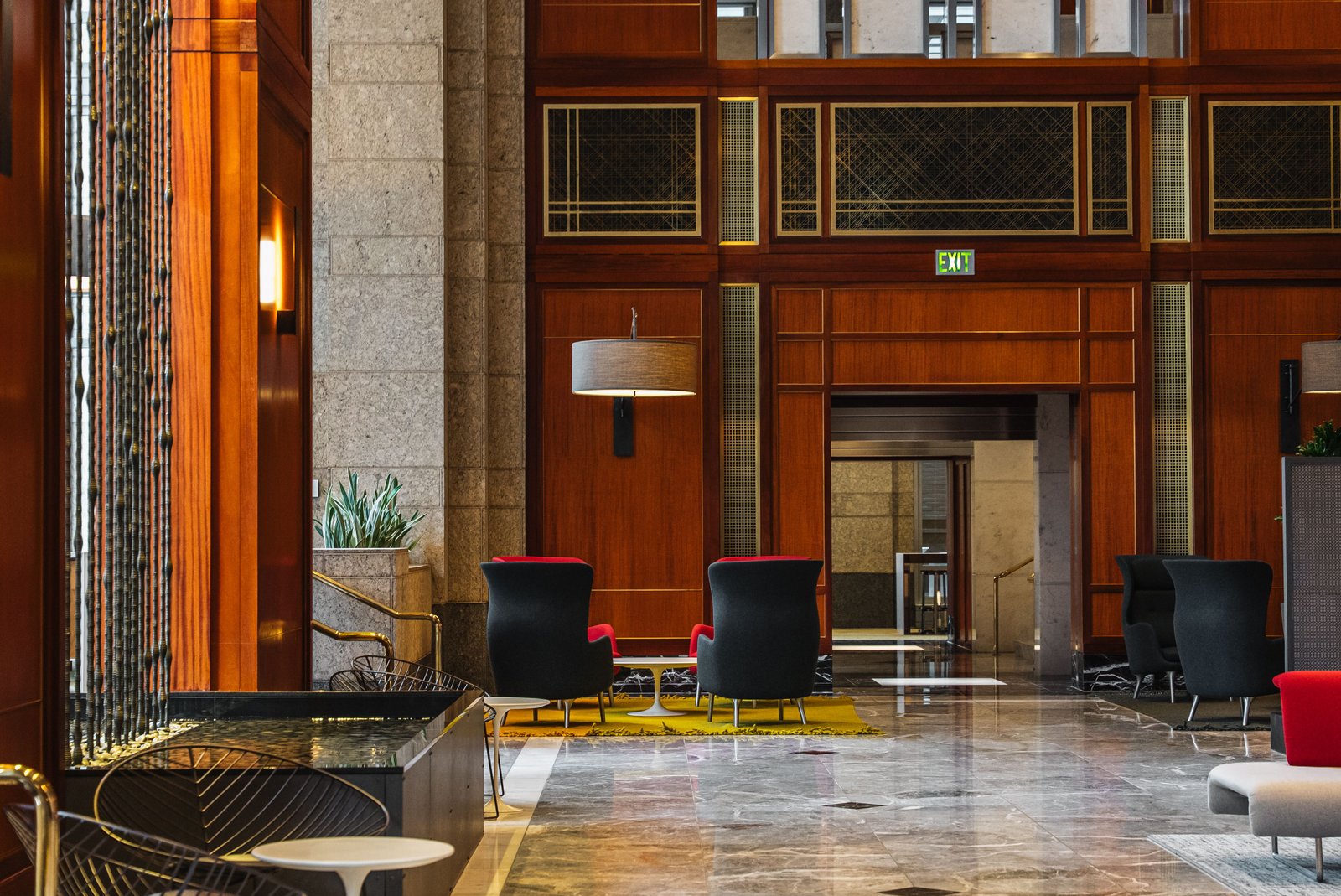
Enter a well-designed hotel or spa and you can see that a lot of attention has been paid to the environment: the lighting, furniture, finishes and layout have all been carefully considered. You can even notice the scent, which also plays a part in the brand experience. Yet from my experience in hospitality and retail, sound is rarely thought about in the same way. For me this is surprising. Any brand wants its customers and guests to feel comfortable, right? But sound seems to be an afterthought.
Background music can be seen as something that is almost purely mechanical. Someone has chosen a playlist, the music is played all day, and so long as no one complains there is no reason to revisit it.
This, I have always thought, is a missed opportunity; not that all hotels need to have specially composed music, but that sound is also part of the experience of a hotel whether or not this has been considered.
Sound is part of the guest experience
Imagine a hotel lobby at check-out time; guests are handing back their room keys, the concierge is busy answering questions, and people are coming and going with their luggage. You have probably seen this before; there is already rather a lot happening, and the music is just one more sound in the room; but come back in a few hours, when things have quietened down, and you’re likely to find the same music playing again. Perhaps at the same volume too.
In a spa, things are a little different. People go there to relax and the surroundings are usually arranged to suit this purpose. But I have often wondered why the same kind of music follows you from reception into the treatment rooms. The pleasant sound one hears on arrival may seem less welcome when one is lying on a massage table for an hour, especially if one can hear people chatting in the next room and machinery running nearby.
And it is not always the music itself that is the trouble. Sometimes it is too loud, sometimes the same piece is repeated, or it is simply not suitable for the room. We have all experienced this, no doubt, at some time or other. Even good music can become tedious after a while.
What does the science of sound tell us?
Certainly, there is a lot of research into hearing and our relationship with sound; but this goes far beyond whether we enjoy a piece of music. I am particularly interested in psychoacoustics; I am intrigued by the way two sounds at roughly the same volume can affect us very differently. Everyone who has listened to a steady hum or a repetitive noise can probably remember how it feels.
The field of hospitality is especially concerned with some of these findings. In 2022 the Journal of Business Research published a meta-analysis covering 56 studies on music in tourism and hospitality settings. It found that the suitability of the music and the personal preferences of those listening influenced their responses; this sounds obvious, but it is useful to remember when a company assumes it is enough to simply have music playing.
To describe how people experience the sounds around them, the concept of soundscape is used. I think it is particularly appropriate in the context of hotels and spas, as music is only one part of what guests hear; there is also the air conditioning, nearby conversations, traffic outside, footsteps and all kinds of small noises that someone familiar with a place may stop noticing, but which guests may notice straight away.
None of this means that we can prescribe one frequency or one kind of music and expect everybody to feel relaxed. Each person has their own taste. What works in one situation is not necessarily right in another.
Beyond the playlist
There is nothing wrong with using playlists in a hotel or spa. They are convenient, easy to change and, with a bit of thought, can work perfectly well. However, I do not think it is just a matter of choosing music for morning and evening; one can spend a whole day choosing music for the hotel lobby only to find that when one actually enters the room it does not sound good at all. I would rather hear how the room sounds during the day, where the speakers are, and whether the music is actually adding anything. It might be better simply to turn down the volume than to look for a different playlist.
There are also alternatives to conventional music. In a spa treatment room, for example, it might be better to choose something less melodic, perhaps a continuous ambient sound without an obvious beginning or end. Or maybe the place is quiet enough without any music at all.
I don't think guests have to notice the work on the sound; most probably won't, just as they don't think about the lighting unless something goes wrong. The appeal of sound design for a space is that it is not about giving people something to listen to, but about making sure what they hear belongs there.
Keeping the experience consistent
One more thing has to be taken into account for hotel groups and wellness operators with several locations: who actually chooses what is played? One property might have carefully chosen music in its public areas, while another leaves the choice to whoever happens to be working. Over time, the sounds at one property can differ considerably from those at another.
Of course, a city hotel, a beach resort and a wellness retreat shouldn’t sound the same. They have different guests and surroundings. But you’d expect a hospitality brand to share some ideas about sound just as it does about lighting, interiors and service.
A more consistent approach does not mean that each establishment has to play exactly the same music. It is a question of having some guidelines in place, allowing for local differences and making sure the experience does not depend entirely on individual staff preferences.
Making sound work commercially
It is not particularly difficult to manage this, and many venues already have systems that could be used more deliberately without replacing the equipment. Sound environments can be selected or developed for different areas, scheduled throughout the day and, where appropriate, managed across multiple properties. With such a system, it is easier to review what is being played and change it when circumstances change.
Licensing must also be observed. Music and other audio content used commercially requires the right permissions, and a personal streaming subscription does not automatically cover use in a hotel, restaurant or spa.
For me it all boils down to one simple observation. Hotels and wellness businesses put a lot of effort into creating the right ambience for their guests, but they can still take sound for granted. Perhaps it would be worth taking a little more time to listen to what your guests are actually hearing before you decide what should be played. At 2nd Bell, we develop purpose-designed sound environments for commercial spaces, combining creative sound design, principles of auditory perception and commercial content licensing. Explore how purpose-designed sound could work in your space
References
Trompeta, M.-A., Karantinou, K., Koritos, C. and Bijmolt, T.H.A. (2022). A meta-analysis of the effects of music in tourism and hospitality settings. Journal of Business Research, 138, 130-145. https://doi.org/10.1016/j.jbusres.2021.08.067
International Organization for Standardization (2014). ISO 12913-1:2014: Acoustics - Soundscape - Part 1: Definition and conceptual framework.